Exploring South Florida’s Atlantic Coast? The South Florida Atlantic Coast Guide covers the full region from Miami Beach to Palm Beach.
Table of Contents
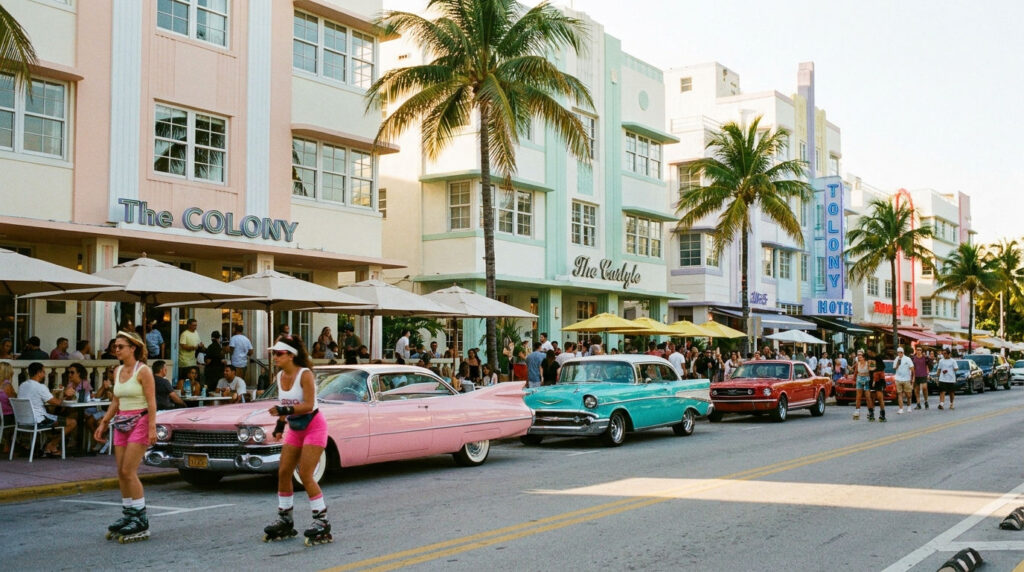
South Beach is the most recognizable neighborhood in Florida — possibly in the entire South. The pastel Art Deco buildings along Ocean Drive, the wide white sand beach, the palm-lined promenade, the open-air bars with their bass-heavy soundtracks: it’s an image that’s been reproduced so many times that actually arriving can feel like stepping into a photograph you’ve seen a thousand times. What surprises most visitors is how much the reality exceeds the image. The beach is genuinely spectacular. The architecture is more impressive in person. And the energy — on a warm evening when the street fills up and the whole scene comes alive — is unlike anything else in the United States.
South Beach occupies the southern tip of Miami Beach, the barrier island that sits east of Miami proper across Biscayne Bay. It’s a compact, walkable neighborhood where serious Art Deco preservation has kept the scale human and the character intact despite the enormous tourism pressure. The beach itself runs wide and clean for miles, backed by the preserved historic district. Lummus Park, the green strip between Ocean Drive and the sand, is one of the great urban beaches in the country — free, open, and filled with a cross-section of Miami’s extraordinary population at every hour of the day.
South Beach is the southern section of Miami Beach, bordered roughly by 5th Street to the south and 23rd Street to the north. Ocean Drive runs along the beachfront and is the main tourist corridor. Collins Avenue runs parallel one block west and has the majority of the hotels. Washington Avenue, one more block west, is the main commercial and nightlife street. The MacArthur Causeway (I-395) and the Julia Tuttle Causeway (I-195) provide the main connections to Miami on the mainland. Miami International Airport is about 20-25 minutes west by car; Fort Lauderdale-Hollywood International is about 40 minutes north.
Map & Orientation
Use the map below to navigate South Beach — find hotels along Collins, restaurants on Ocean Drive and Washington Avenue, and beach access points along the promenade.
Where to Stay in South Beach
South Beach has one of the most storied hotel scenes in America, with Art Deco-era properties that have been meticulously restored alongside modern luxury towers. The iconic addresses along Collins Avenue — the Delano, the Fontainebleau (technically Mid-Beach), the National, the Setai — represent some of the finest hotels in Florida. Ocean Drive’s smaller boutique hotels deliver the full Art Deco experience at various price points. Washington Avenue has more affordable options for budget-conscious visitors who want to be in the heart of the action. Book well in advance for winter season and especially for Art Basel in early December, when the city fills completely.

- vacationflorida.tv/DreamSouthBeach
- 1111 Collins Ave, Miami Beach, FL, 33139

- vacationflorida.tv/HamptonInnMiamiCoconutGrove
- 2800 Sw 28th Ter, Miami, FL, 33133

- vacationflorida.tv/CatalinaClubMiami
- 1732 Collins Ave, Miami Beach, FL, 33139

- vacationflorida.tv/MBHotelTrademarkCollectionByWyndham
- 6525 Collins Ave, Miami Beach, FL, 33141
Things To Do in South Beach
The Art Deco Historic District walk is essential — the Miami Design Preservation League offers guided walking tours of the district that provide context for what you’re seeing. The beach itself is the central activity: Lummus Park’s wide sand and the famous lifeguard stands (each a colorful Art Deco structure of its own) are a world-class urban beach experience. The Bass Museum of Art has an impressive permanent collection in a beautifully restored historic building. The New World Symphony, headquartered in a Frank Gehry-designed campus at SoundScape Park, offers free outdoor screenings and performances. For shopping, Lincoln Road Mall — a pedestrian street — has both mainstream retail and local boutiques in a pleasant outdoor setting.
Where to Eat in South Beach
South Beach dining ranges from legendary institutions to current scene-setters. Joe’s Stone Crab — open from October through May — is the undisputed institution, serving Florida stone crab claws that have made it one of the most famous seafood restaurants in the country since 1913. The stretch of restaurants along Ocean Drive is heavy on ambiance and tourism, with quality varying widely; the better meals are generally found a block or two off the main tourist strip. Washington Avenue and the side streets between Collins and Washington have a more authentic local dining scene. For breakfast, the area around 11th Street and Washington has several casual spots popular with residents who actually live in South Beach.
South Beach Vacation FAQs
What is the Art Deco Historic District in South Beach?
The Art Deco Historic District covers approximately 1 square mile in South Beach, centered on Ocean Drive, Collins Avenue, and Washington Avenue between 5th and 23rd Streets. It contains the largest concentration of Art Deco architecture in the world — over 800 buildings constructed between 1923 and 1943 in the streamline moderne and tropical deco styles. The district was added to the National Register of Historic Places in 1979, largely through the advocacy of the Miami Design Preservation League (MDPL), which still offers walking tours. The buildings are best experienced in the early morning light or at dusk when they’re illuminated.
Is South Beach the same as Miami Beach?
No — South Beach is the southern portion of Miami Beach, a separate city from Miami on the barrier island east of the mainland. Miami Beach extends north from South Beach through Mid-Beach (where the Fontainebleau is located) and North Beach, all the way to Surfside and Bal Harbour. “South Beach” technically refers to the area below about 23rd Street, which contains the Art Deco Historic District and the most famous stretch of beach. In casual usage, many people say “South Beach” when they mean the broader Miami Beach area, and “Miami” when they mean the entire metro.
When is the best time to visit South Beach?
November through April is peak season — warm, sunny, dry weather with the full roster of events, restaurant openings, and beach scene. Art Basel in early December is the most high-profile cultural event of the year, drawing the international art world and commanding peak hotel rates. January through March is the sweet spot for most visitors: perfect weather, full energy, and slightly lower rates than December. Summer is hot, humid, and prone to afternoon thunderstorms — but hotel rates drop significantly and the beach scene takes on a more local, relaxed character without the tourist peak.
How do I get around South Beach without a car?
South Beach is one of the most walkable destinations in Florida. The Art Deco district, the beach, Lincoln Road, and the majority of restaurants and nightlife are all within comfortable walking distance of most hotels. The free South Beach Local circulator bus covers the area. Citi Bike has stations throughout the neighborhood and is practical for getting around the beach corridor. Ride-share services are widely available for trips to Wynwood, downtown Miami, or other mainland destinations. Parking in South Beach is expensive and limited — if you’re staying in the neighborhood, a car is more of a liability than an asset.
What is Lincoln Road in South Beach?
Lincoln Road is a pedestrianized outdoor mall running east-west through the heart of South Beach between Alton Road and Washington Avenue. It was designed by celebrated landscape architect Morris Lapidus in the 1960s and has been the social center of South Beach ever since. Today it’s lined with restaurants, shops, galleries, and outdoor cafes, and is one of the most people-watching-friendly streets in Miami. The Sunday farmers’ market on Lincoln Road is a local institution. The New World Symphony’s SoundScape Park is at the east end of Lincoln Road and anchors the cultural side of the street.
Is South Beach safe?
The main tourist areas of South Beach — Ocean Drive, Collins Avenue, Lincoln Road — are heavily patrolled and generally safe during daylight hours and into the evening. The beach itself has lifeguards during operating hours. Like any densely populated urban area, common-sense precautions apply: be aware of surroundings in crowded areas, keep valuables secured, and avoid poorly lit side streets late at night. South Beach’s nightlife can bring large crowds and elevated energy on weekends, particularly during spring break and major events, which warrants additional awareness. Overall, the area is well-managed for the tourist volume it handles.
What is the best beach in South Beach?
The beach runs continuously along the entire eastern edge of South Beach, and quality is consistent throughout. The stretch between 10th and 14th Streets in Lummus Park is the most iconic — this is where the famous Art Deco lifeguard stands are located and where the classic South Beach scene unfolds. The beach widens significantly north of 5th Street, and the area between 21st and 23rd Streets tends to be slightly less crowded than the central tourist zone. The water is typically clear blue-green Atlantic, warm from June through October, and the sand is white and well-maintained by the city.
Can I bring my dog to South Beach?
South Beach has a designated off-leash dog beach at 11th Street — one of the few official dog-friendly beach areas in Miami-Dade County. Dogs are not permitted on the main beach outside of this designated area. Several South Beach hotels are pet-friendly, and the neighborhood’s restaurants with outdoor seating often welcome leashed dogs. Lummus Park has some dog-friendly areas outside of beach hours. For the most up-to-date pet policies, check directly with your hotel and verify current beach regulations, as rules can change seasonally.