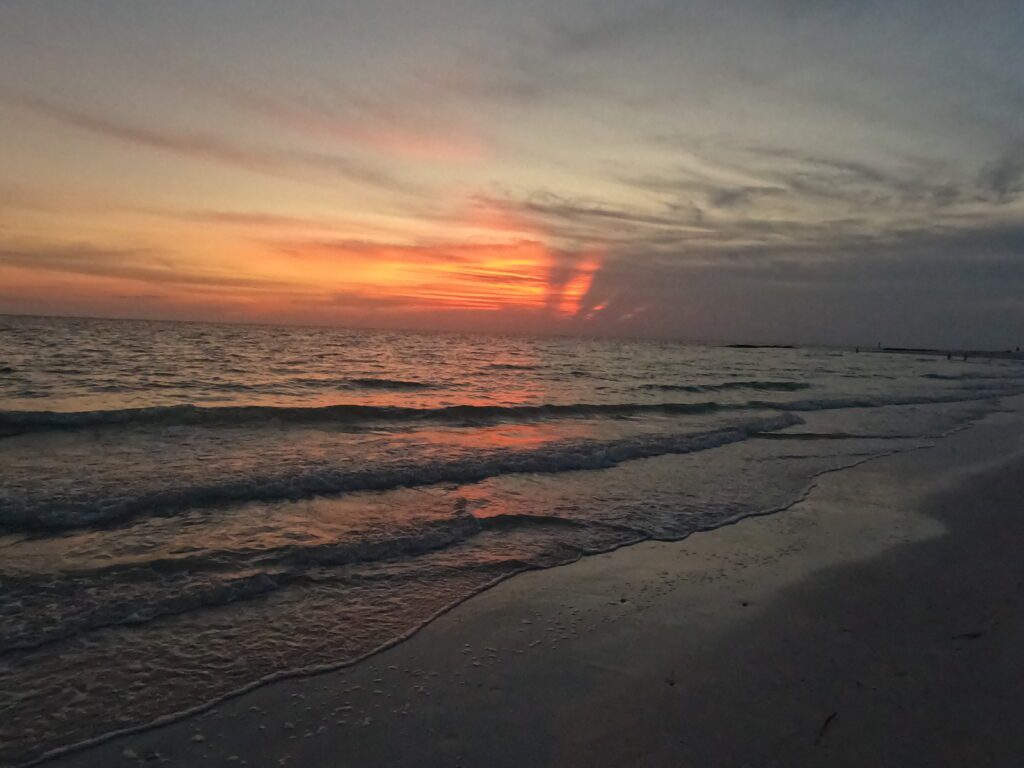
There is a version of Florida that looks like a parking lot with water nearby. And there is a version that feels like your own private stretch of coastline. The difference is usually timing. Florida beach crowds are predictable if you know what drives them — and a few smart choices about when and where you go can completely change the experience.
As someone who lives in Tampa Bay and spends a lot of time on Gulf Coast beaches, here is the honest local version of when to go, when to avoid, and which beaches stay manageable even when the rest of Florida is packed.
The Florida Beach Crowd Calendar What Actually Drives the Rush
Florida beach crowds are not random. They follow a fairly consistent pattern every year and once you understand it, planning around it becomes straightforward.
Spring Break — March through mid-April is the peak chaos window on most Florida beaches. College spring break runs through March while family spring breaks hit in waves from late February through mid-April depending on the school district. Clearwater Beach, Fort Lauderdale, Panama City Beach, and Daytona Beach take the biggest hits. Destin, Siesta Key, and the Keys also see significant volume. If you are visiting Florida in March or early April with no flexibility, go early in the morning and choose a less obvious beach.
Summer — mid-June through August is the busiest sustained period of the year. Families with school-age kids flood Gulf Coast beaches during this window and the crowds are consistent rather than event-driven. Parking is harder, waits at restaurants are longer, and the beach fills from mid-morning on. The upside is that the Gulf water is warm, days are long, and Florida’s afternoon storm pattern often clears crowds naturally by mid-afternoon.
Snowbird season — December through February brings a different kind of crowd to the Gulf Coast. Retirees and longer-stay visitors from cold-weather states settle into Southwest Florida, the Tampa Bay area, and the Keys for weeks or months. The beaches themselves are rarely packed the way they are in summer but popular spots like Siesta Key, Naples, and Sanibel see steady traffic and restaurant waits lengthen considerably on weekends.
Holiday weekends spike year-round. Memorial Day, Fourth of July, and Labor Day are the summer peaks. Thanksgiving weekend, Christmas week, and New Year’s are the winter peaks. Any major holiday weekend on a Gulf Coast beach can mean a two-hour parking situation and no umbrella rentals left by 10am.
The Best Time to Visit Florida Beaches to Beat the Crowds
If you can choose your timing without being locked into school calendars or holiday windows, late March through May is the sweet spot. The weather is genuinely excellent, the water is warming up beautifully, the summer crowds have not arrived, and most beaches feel accessible and relaxed. This is consistently the time of year I’d recommend to anyone who asks when Florida is at its best.
September is underrated and significantly cheaper. It is the slowest month of the year for most Florida beach destinations and hotel and vacation rental rates reflect that. The water is still warm from summer, the humidity has started to ease, and many beaches feel noticeably quieter. The honest trade-off is hurricane season — September sits squarely in the peak of it. Travel insurance and a flexible itinerary are both worth having. But the savings can be significant and for travelers who can monitor the weather and adjust, September is one of the best-kept Florida beach secrets.
October and early November hit another sweet spot after hurricane season eases. Excellent weather, warm water, lower rates, and that pleasant transition into the cooler months. Locals know this and take advantage of it. The crowds return in earnest around Thanksgiving so plan ahead if you want the October window.
For summer visits, arriving at the beach before 9am is the single most effective crowd-avoidance strategy. Parking lots that are full by 10:30am are often nearly empty at 7:30am. An early beach morning followed by a shaded lunch and a later return for sunset is a better plan than fighting the full midday beach scene.
Which Florida Beaches Stay Less Crowded Year-Round
Some beaches attract and deserve their crowds. Others consistently stay more manageable because of how they’re set up, where they sit, or how you access them. These are the ones worth knowing about.
State Park Beaches — The Crowd Avoidance Cheat Code
This is the single most consistent piece of local advice I give: when in doubt choose a state park beach. Florida state parks cap parking and entry at capacity which means the beach never gets truly overwhelmed. You pay one entrance fee that covers everything including parking — no circling the lot, no meters, no walking six blocks from a paid garage. When the lot fills, latecomers wait outside. That natural limit keeps the experience manageable in a way resort beaches simply cannot.
Caladesi Island State Park is only accessible by ferry from Honeymoon Island — that built-in barrier keeps it from ever feeling truly packed. On a day when Clearwater Beach is shoulder-to-shoulder, Caladesi can feel like a completely different world. See our Honeymoon Island ferry to Caladesi guide for planning both in one trip.
Honeymoon Island State Park near Dunedin fills its lot on busy days but still feels noticeably calmer than the Clearwater Beach main strip. Walk north from the main access and the beach thins out fast. Dog-friendly too which makes it worth the extra stop. See our Honeymoon Island listing for what to expect.
Fort De Soto Beach has multiple beach areas which naturally spreads the crowd across a larger footprint. North Beach’s sandbar-style entry draws families but the surrounding areas and trails give everyone room to spread out. Go early on weekends. See our best things to do in Tampa for building a Fort De Soto day.
Bahia Honda State Park in the Florida Keys is probably the best beach in the Keys and feels dramatically quieter than you’d expect given how good it is. Its distance from Key West filters out casual day-trippers. Go early and you may have significant stretches of shoreline nearly to yourself. See our Bahia Honda State Park listing and our Florida Keys vacation guide.
St. George Island State Park on the Forgotten Coast requires effort to reach and that effort pays off every time. Miles of undeveloped shoreline on Florida’s least-visited coast. I recently visited and was genuinely blown away by the quiet and the beauty. See our Panhandle vacation guide for planning the broader trip.
Beaches That Stay Manageable Even in Peak Season
Anna Maria Island has its own natural crowd management system — the island’s small size and limited bridge access mean parking fills before the beach truly overwhelms. The free island trolley removes the parking problem entirely for anyone staying on the island. Book your rental in walking or trolley distance and the crowd question largely solves itself. Our Anna Maria Island vacation guide covers the full island.
Pass-a-Grille at the south end of St. Pete Beach keeps a quieter character even when the main St. Pete Beach strip is busy. Historic cottages, a neighborhood feel, and parking that is more manageable than you’d expect. Our Pass-a-Grille guide is worth reading before you go.
Beer Can Island on Longboat Key requires knowing where to look and what to expect when you get there — driftwood, changing conditions, and a natural feel that most visitors drive right past. See our Beer Can Island Longboat Key guide.
Crescent Beach on Siesta Key sits south of the main Siesta Beach access and tends to feel calmer even when the main public beach is at full capacity. The same famous sand, less of the parking battle. See our Siesta Key vacation guide for the full island breakdown.
The Timing Strategies That Actually Work
Arrive before 9am. This is the most reliable crowd-avoidance move regardless of season or destination. Parking lots that seem impossible by late morning are often nearly empty at sunrise. A beach morning that starts early and wraps up by 1pm often beats a midday-to-sunset approach entirely.
Go on a weekday. Even during the busiest periods Tuesday through Thursday are noticeably less crowded than Friday through Sunday. If your schedule has any flexibility at all that midweek window is worth prioritizing.
Use the afternoon storm as a crowd clearer. Florida summer afternoons often bring a quick thunderstorm that clears the beach for 30 to 60 minutes. The beach after a storm — when the sky clears, the light goes golden, and half the crowd has packed up and left — can be one of the nicest beach moments of a summer trip. Stay put and let it work in your favor.
Stay on the island instead of day-tripping. Day-trippers create the biggest traffic and parking surge on popular Florida beaches. Visitors staying on Anna Maria Island, Siesta Key, or Clearwater Beach who can walk or trolley to the sand sidestep the entire parking situation that frustrates day visitors. Our ultimate car-free AMI itinerary shows exactly how to pull this off on Anna Maria Island.
Eat before the rush or after it. Lunch at 11am or 2pm instead of noon. Dinner at 5:30pm or 8pm instead of 7pm. Restaurant waits during Florida beach season can add an hour to any meal — going slightly off the peak window makes a real difference.
The Honest Trade-Off on Shoulder Season
Every crowd-avoidance strategy involves a trade-off. Shoulder season may mean cooler water, shorter days, or weather that requires a backup plan. September’s low prices come with hurricane awareness. Midweek visits may be harder to coordinate with school schedules. Early mornings require actually getting out of bed.
None of these are dealbreakers. They are simply part of planning a Florida beach trip that prioritizes experience over convenience. The travelers who time it right and choose their beach carefully rarely come home with stories about fighting for parking or waiting an hour for a table. They come home with stories about a beach that felt like it was made for them.
That version of Florida is genuinely available most of the year. You just have to know when and where to look.
Ready to plan your trip around the right timing? Browse our florida beach vacation rentals that fit your trip guide, our Gulf Coast vacation guides, and our best places to stay in Florida directory for vetted options near every beach on this list.
🗺️ This spot is on our interactive Florida map
We put 350+ of our local picks on one living map — the Vacation Florida Guide. The beaches without the crowds, the restaurants with no website, springs nobody knows about, where locals actually stay — and the famous spots worth skipping, with what to do instead.
- An interactive map on your phone — tap any pin for our honest local take.
- Ready-made itineraries — timed to beat the gates.
- New spots every week — buy once, updates for life.
It’s the guide we wish existed every time someone asked us “okay, but where would YOU go?”