Exploring Florida’s Space Coast? The Central Florida Atlantic Coast Guide covers the full region from Cape Canaveral to Melbourne.
Table of Contents
Melbourne sits at the southern end of Florida’s Space Coast, where the energy of the rocket launches to the north gives way to something quieter and more residential. This is a place that Floridians know well but out-of-state visitors often overlook — which is precisely what makes it worth discovering. The beaches here, particularly on the barrier island communities of Melbourne Beach and Indian Harbour Beach, are wide, clean, and rarely crowded. The Indian River Lagoon that separates the barrier island from the mainland is one of the most biodiverse estuaries in North America, with manatee, dolphin, and over 300 species of birds regularly documented in its waters.
Downtown Melbourne on the mainland has undergone a genuine revitalization over the past decade, with a walkable historic district full of independent restaurants, craft breweries, art galleries, and live music venues that give the city an unexpected cultural dimension. The combination of laid-back barrier island beaches, a thriving downtown scene, and proximity to both Kennedy Space Center and the surf culture of Cocoa Beach makes Melbourne an underrated base for exploring the entire Space Coast.
Melbourne is located in Brevard County at the southern end of the Space Coast, about 70 miles east of Orlando via US-192 or SR-528, and about 30 miles south of Cocoa Beach via A1A. The city proper sits on the mainland along the Indian River Lagoon, while the barrier island communities of Indialantic, Melbourne Beach, and Indian Harbour Beach are accessed via causeways. Downtown Melbourne is centered around New Haven Avenue and the Melbourne Harbor waterfront. Sebastian Inlet State Park, one of Florida’s premier surf spots and wildlife areas, is about 20 miles south via A1A.
Map & Orientation
Use the map below to orient yourself across Melbourne, the barrier island beaches, and the Indian River Lagoon corridor.
Where to Stay in Melbourne
Melbourne’s lodging options span the mainland and the barrier island, with different experiences on each side. The barrier island communities of Indialantic and Melbourne Beach have small beachfront hotels and vacation rentals with direct ocean access and a quieter, more residential atmosphere than the busier strips further north on the Space Coast. The mainland Melbourne area near downtown has chain hotels and newer boutique options within walking distance of restaurants and the waterfront. For Space Center visits, properties in the northern part of the county near Cocoa Beach and Cape Canaveral are better positioned, but Melbourne works well as a quieter alternative base.
Things To Do in Melbourne
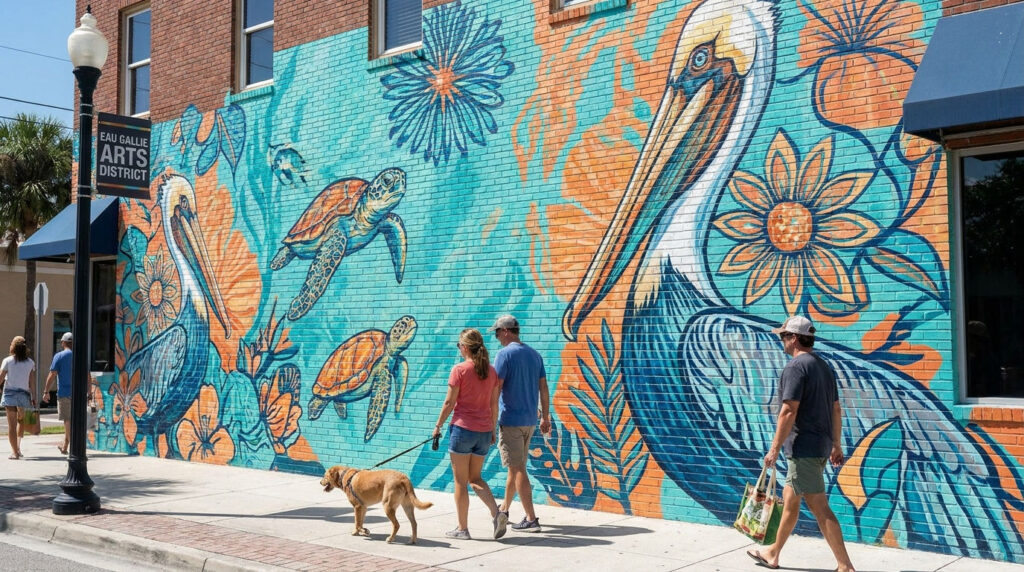
Sebastian Inlet State Park, about 20 miles south via A1A, is one of the highlights of the entire Space Coast — consistently rated among Florida’s best state parks, with excellent surfing, fishing from two jetties, snorkeling, kayaking, and a small museum dedicated to the 1715 Spanish treasure fleet that wrecked nearby. The Indian River Lagoon offers world-class kayaking and paddleboarding through manatee habitat, with several outfitters providing guided tours. Downtown Melbourne’s Eau Gallie Arts District is one of the more surprising cultural pockets in the region, with galleries, studios, and public art in a compact historic neighborhood. The Brevard Zoo in nearby Viera is an excellent half-day option for families.

Where to Eat in Melbourne
Downtown Melbourne has the most interesting dining scene on the Space Coast south of Cocoa Beach, anchored by New Haven Avenue and the surrounding streets. The craft brewery scene is strong here, with several local taprooms that double as restaurants. Fresh seafood is the natural focus — grouper, shrimp, and oysters from nearby waters — but the variety is broader than most small Florida beach cities. The Eau Gallie Arts District has a cluster of independently owned restaurants with a more creative approach than the seafood-and-burgers standard. For waterfront dining, the Melbourne Harbor area has casual options with views over the Indian River.
Melbourne, Florida Vacation FAQs
What beaches are near Melbourne, Florida?
The closest beaches to Melbourne are on the barrier island immediately east, accessible via several causeways. Indialantic Beach and Melbourne Beach are the primary options — both are wide, clean Atlantic beaches with a quieter, more local feel than the beaches further north around Cocoa Beach. Melbourne Beach village has a small walkable downtown with shops and restaurants. Further south, the beach at Sebastian Inlet State Park is one of the finest in Florida, combining excellent surf, jetty fishing, and natural scenery in a state park setting.
How far is Melbourne from Kennedy Space Center?
Kennedy Space Center Visitor Complex is about 35-40 miles north of Melbourne, a drive of approximately 45-55 minutes via A1A or US-1. The drive north through Cocoa Beach and Cape Canaveral along A1A is scenic and passes through the heart of Space Coast surf culture. On launch days, the roads north of Cocoa Beach can slow significantly — plan extra time and consider using US-1 on the mainland as an alternate route. Launch schedules are posted on the Kennedy Space Center website.
What is the Indian River Lagoon?
The Indian River Lagoon is a 156-mile-long estuary running along Florida’s Atlantic coast from Ponce Inlet in the north to Jupiter Inlet in the south — the Melbourne area sits near its midpoint. It’s one of the most biodiverse estuaries in North America, supporting over 4,300 species of plants and animals including manatees, bottlenose dolphins, sea turtles, and more than 300 bird species. Kayaking and paddleboarding through the lagoon is one of the most rewarding outdoor experiences on the Space Coast, with manatee encounters virtually guaranteed in the right conditions.
Is Melbourne Beach different from Melbourne?
Yes — Melbourne Beach is a separate municipality on the barrier island, distinct from the city of Melbourne on the mainland. Melbourne Beach has its own small downtown with shops and restaurants, a quieter and more residential atmosphere than Indialantic to the north, and direct Atlantic beach access. It’s connected to the mainland by the Eau Gallie Causeway and Melbourne Causeway. The city of Melbourne proper sits on the mainland along the Indian River, with its own distinct downtown, airport, and suburban neighborhoods. Most visitors move easily between both sides of the lagoon.
What is Sebastian Inlet and why is it popular?
Sebastian Inlet State Park straddles the inlet between Brevard and Indian River Counties, about 20 miles south of Melbourne Beach via A1A. It’s one of Florida’s most consistently popular state parks for several reasons: excellent surfing at First Peak (one of Florida’s best surf breaks), productive fishing from two jetties on either side of the inlet, snorkeling in clear inlet waters, and the McLarty Treasure Museum documenting the 1715 Spanish treasure fleet that wrecked along this stretch of coast. The park also has camping, kayaking, and nature trails through coastal scrub habitat.
What is the Eau Gallie Arts District?
The Eau Gallie Arts District (EGAD) is a historic neighborhood in Melbourne that has emerged as the city’s creative hub over the past decade. Centered on Highland Avenue near the Indian River waterfront, the district has art galleries, studios, a growing number of independent restaurants and bars, and a monthly art walk that draws the local creative community. The neighborhood feels authentically local rather than tourist-developed, which gives it a character that’s increasingly rare in Florida coastal cities. It’s a good evening destination combined with dinner at one of the surrounding independent restaurants.
How far is Melbourne from Orlando?
Melbourne is about 65-70 miles east of Orlando, roughly a 75-90 minute drive depending on traffic and route. US-192 East is a direct route from the Orlando area to Melbourne and the Space Coast. SR-528 (the Beachline) provides a faster but tolled option connecting to Cocoa Beach and then south to Melbourne via A1A. The proximity to Orlando makes Melbourne a practical beach add-on for theme park visitors, though the slightly longer drive means most Orlando-based visitors tend to stop at Cocoa Beach before making it this far south on the Space Coast.
When is the best time to visit Melbourne?
March through May and September through November are the optimal windows — warm enough for beach days, comfortable temperatures for outdoor exploration, smaller crowds, and lower accommodation rates than peak summer. Summer is warm and humid with afternoon thunderstorms common, particularly in July and August. Fall brings some of the best surf conditions to the Space Coast as Atlantic swells build from storm systems. Winter is mild and quiet — good for wildlife viewing in the lagoon and state parks, when crowds are minimal and manatees concentrate in the warmer waters near power plant discharge areas to the north.