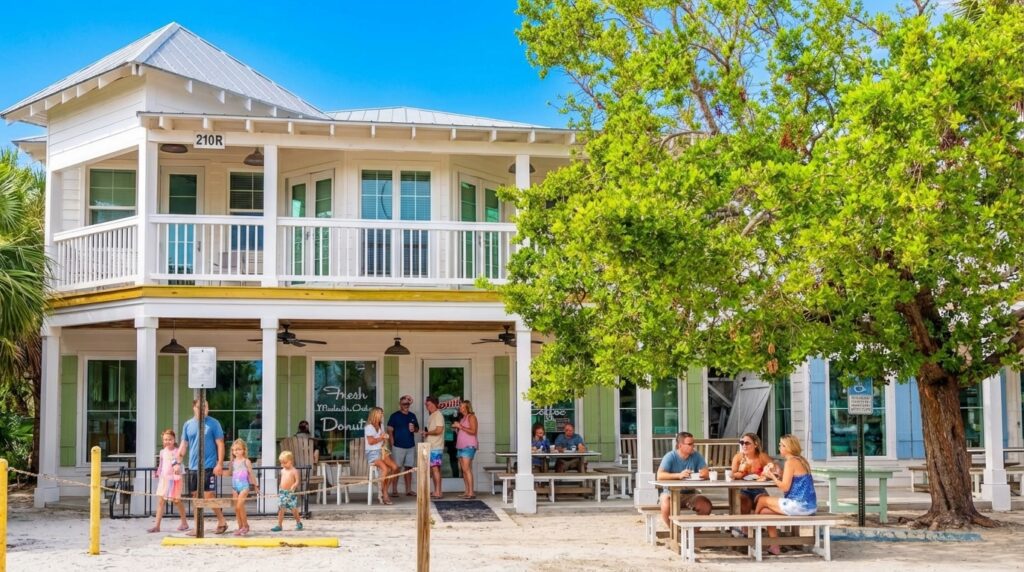
A Landmark Lost and Found
For those of us who call this seven-mile stretch of paradise home, the view at the end of Pine Avenue has felt like a missing tooth in a familiar smile. In late 2024, the back-to-back fury of Hurricanes Helene and Milton did more than just batter our coastlines; they severed our connection to the turquoise waters of Tampa Bay by tearing away the City Pier’s walkway. For nearly two years, our most iconic landmark has sat as a taunting, unreachable island.
But the silence of the north end is finally giving way to the rhythmic song of progress. As we navigate May 2026, the reconstruction is no longer a distant promise—it is a homecoming. The heavy machinery and turbidity barriers are markers of a resilient community preparing to reclaim its “Island Time.” With the finish line in sight for late summer or early fall, the heartbeat of Anna Maria is preparing to thrum once more.
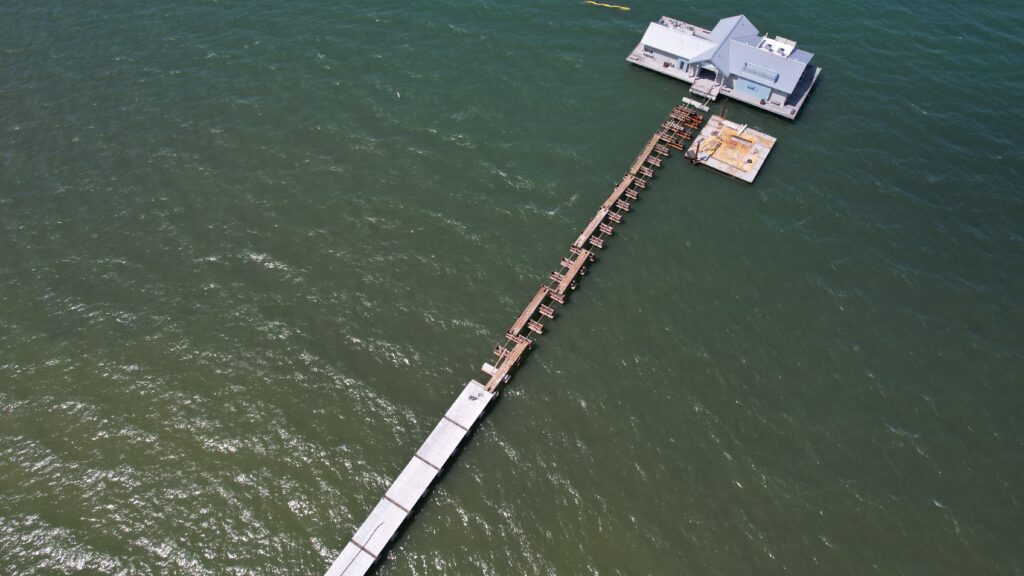
Resilience Over Tradition: Concrete is the New Wood
To the “Old Florida” purist, the soul of a pier is found in the weathered creak of timber underfoot. However, the 2026 rebuild introduces a surprising, high-tech pivot that trades sentiment for survival. In a move toward ultimate durability, the city and contractor Tampa Bay Marine (TBM) have transitioned to reinforced concrete and metal structures.
This isn’t just a patch job; it’s a fortress. Construction crews have utilized heavy-duty reinforced concrete pilings and bents, employing laser-leveling to ensure a consistency that the old wooden structures could never match. As of April 30, 2026, TBM project manager Pedro Lopez confirmed that the project has reached a pivotal milestone: the remaining concrete bents—spanning less than a third of the walkway—were set to be poured on May 4. Once these slabs are laid, they will serve as the foundation for the final hardwood decking.
While we may miss the specific percussion of footsteps on old planks, the logic is undeniable. We are building a pier that intends to be here for the next century, regardless of what the Gulf throws our way.
The “Slider” Debate: Reimagining the T-End
The most spirited debate currently rippling through City Hall involves the “building shell” of the T-end. With the departure of Mote Marine, the city is weighing how to utilize the primary building. The conflict pits a traditional enclosed space against a “village approach” that utilizes “hurricane-proof” retractable sliding doors.
The stakes are high for both aesthetics and capacity:
- The Enclosed Vision: A climate-controlled, four-walled space offering a quiet, intimate experience but limited to roughly 50 seats.
- The Open-Air Pavilion: Replacing walls with sliders to create a flexible, breathing space. This would nearly double the capacity to 96 seats, allowing the building to function as a public cantina or restaurant that embraces the salt air.
The human element is central here. The commission recently authorized Mayor Mark Short to negotiate a lease for this larger building with GSM Partners (Brian Seymour, Benjamin Sato, and Jason Sato). As beloved local operators, their potential return to a larger footprint at the pier’s end has the community buzzing.
“I’m in favor of opening that space up with sliders,” noted Commissioner Gary McMullen during a recent workshop. “The sliders provide the city with the greatest flexibility for future use.”
The Ferry Friction: A Multi-Million Dollar Standoff
While the pier rises, a political standoff remains anchored at the shore. Manatee County has pledged $2 million toward the rebuild, but the funding came with a catch: a commitment to the Gulf Islands Ferry. Despite the county’s contribution, the City of Anna Maria recently rejected a resolution for a permanent ferry landing, leading to a high-stakes game of municipal chicken.
The friction centers on the Manatee Belle, the county’s new 96-passenger vessel. Commissioners like Christopher Arendt fear the “enormous burdens” such high-capacity transit puts on the pier’s maintenance and the island’s infrastructure. To protect our local quality of life, the city has stood firm on specific stipulations:
- Any landing must be a separate structure from the pier.
- It cannot be adjacent to the T-end.
- Construction can only begin after the primary pier repairs are finished.
“We have to do what we believe is the right thing for our pier,” Mayor Mark Short stated firmly. “The water ferry landing needs to accommodate our pier, not the other way around.”
More Than a Walkway: The Economic and Social “Ripple Effect”
The pier has always been more than a fishing spot; it is the economic engine of the north end. This cycle is as old as the island itself; in 1911, the pier was the gateway for steamship “day trippers” who would stroll from the dock to Pine Avenue. Today, the foot traffic from the pier is the lifeblood for local staples like Hurricane Hanks and the boutiques that define our shopping district.
But the social “ripple effect” is where the pier’s absence is felt most. Our community relies on a “village approach to motherhood,” a network of families that thrives in school hallways and shared public spaces. The pier serves as the physical anchor for this network. It is the site where we celebrate Suzi Fox Day, honoring the turtle watch director who dedicated her life to our shores. Without the pier, these community celebrations and informal family check-ins lost their central sanctuary. Its return signifies the restoration of our communal living room.
Conclusion: A Beacon of Fall 2026
As we look toward the horizon of late summer and early fall, the progress is undeniable. The city has navigated a complex mosaic of funding to cover the $7.1M–$7.8M project cost—including $3.59 million from FEMA and $1.25 million in state appropriations. With utility installation and decking on the immediate horizon, the wait is nearly over.
We are left to contemplate a vital question: How can we balance the “Old Florida” soul of our island with the high-tech, high-capacity demands of modern tourism?
Perhaps the answer will be found on that first breezy afternoon this October. As the sun dips low, painting the Skyway Bridge in gold, the perfect day will return: a walk down a concrete-strong path, a seat behind a glass slider, and the simple joy of being back where we belong—over the water, together.
Check out our full Anna Maria Island vacation guide to find the best restaurants, things to do, and places to stay
🗺️ This spot is on our interactive Florida map
We put 350+ of our local picks on one living map — the Vacation Florida Guide. The beaches without the crowds, the restaurants with no website, springs nobody knows about, where locals actually stay — and the famous spots worth skipping, with what to do instead.
- An interactive map on your phone — tap any pin for our honest local take.
- Ready-made itineraries — timed to beat the gates.
- New spots every week — buy once, updates for life.
It’s the guide we wish existed every time someone asked us “okay, but where would YOU go?”